Showing posts with label superstition. Show all posts

Thursday, December 31, 2009

Holidays & Celebrations: Hogmanay


Hogmanay is the Scottish name for New Year's Eve and the parties and celebrating that take place on that night.
In Scotland Hogmanay is a very important celebration and people often celebrate more than they do at Christmas. Some Hogmanay traditions are also followed by people in other parts of the UK and in parts of the US. These including singing a song called Auld Lang Syne at midnight, and going first-footing, which means going to friends' houses after midnight to wish them a Happy New Year.

* New Year's Superstitions

It is thought to be lucky if the first person entering your home in the new year is a tall dark man carrying a piece of coal and some food.

Monday, December 14, 2009

Superstition & Plants: Heather

Purple heather

Pink heather

White heather

Heather is a small bush which grows on open windy land and has small purple, pink or white flowers. People connect heather with Scotland where the mountainsides are purple with heather in the autumn. White heather is said to be lucky and gypsies sometimes try to sell it. Gypsies also used to sell clothes pegs for good luck.

Thursday, December 10, 2009

Superstition: Wedding Cake Charms

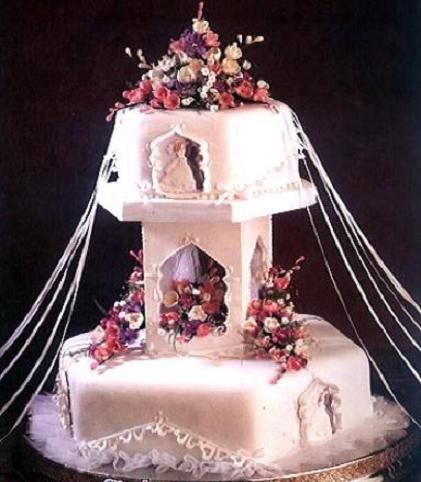
Wedding cake charms is a that tradition cries out for romance and elegance. Understanding this tradition is part of the fun of selecting wedding cake accessories for a wedding. Wedding charms date back to Victorian times. Tiny charms, typically made of silver with ribbons attached, were placed inside the cake. During the reception, bridesmaids and other attendants pulled the ribbons and charms out of the cake. This little ceremony was called a "cake pull", and it is still practised today.
Today, cake pulls aren't just limited to the attendants. Children, parents of the bride and groom, and other guests can all gather around the cake. The ribbons are fanned out, and before the cake is cut, guests pull the ribbons out of the cake. Each charm tells a fortune or prediction for the future and is a quaint memento of the wedding celebration.
The charms are not baked inside the cake. Instead they are hidden either in between the cake layers or under the bottom layer, making insertion and removal fairly simple. Satin ribbons are typically used in coordinating colours or a simple white. •Insert the charms between the cake layers or between the bottom layer and the cake tray.

Charm Meanings

This charming tradition is no longer relegated to the actual wedding either. The tradition has worked its way into wedding showers and bridesmaid's parties as well. The charms represent a variety of symbols and depending on the shape of the charm, their meanings include:
•Ring: Upcoming marriage
•Heart: New love
•Kite: Fun and leisurely life
•Fleur-de-Lis: Love will blossom, prosperity
•Four Leaf Clover: Lucky in life
•Anchor: Adventure awaits
•Red Bean: Good luck
•Star: Wish comes true
•Thimble: Spinsterhood
•Hot Air Balloon: A life of travel and adventure
•Butterfly: Eternal beauty
•Wreath: Contented life

Different cake charms sets may include different symbols, or brides may even choose individual charms to coordinate with the wedding theme, such as dolphins, anchors, shells, boats, and fish to use for a beach wedding.

After the Cake Pull

What happens to the cake pulls after the ceremony is over? The answer solves the question of what to give the bridesmaids as gifts! Many brides buy charm bracelets or silver bangle bracelets that the charms can be added to. Some wedding guests give the charms back to the bride, and she then adds them to a bracelet of her own, creating another wonderful memory of her special day.

Sunday, December 6, 2009

Lucky Charms, Lucky Food

Lucky Charms is a brand of cereal produced in the United States. It first appeared in stores in 1964. The cereal consists of two main components: toasted oat-based pieces and multi-coloured marshmallow bits (marbits) in various shapes. The label features a leprechaun mascot, Lucky, animated in commercials.

The cereal was first around the idea of charm bracelets. Thus the charms of Lucky Charms were born. The mascot, Lucky the Leprechaun (also known as Sir Charms, and originally called L.C. Leprechaun), was also born in 1963, a cartoon character whose voice was supplied by Arthur Anderson until 1992. More brightly coloured charms resulted in better sales than dull or pastel colours.

The first boxes of Lucky Charms cereal contained marshmallows in the shapes of pink hearts, yellow moons, orange stars, and green clovers. Blue diamonds were introduced in 1975. Purple horseshoes joined in 1984, followed by red balloons in 1989, rainbows in 1992, pots of gold in 1994, leprechaun hats in 1996, shooting stars in 1998, and an hourglass in 2008.

Saturday, October 31, 2009

Superstition: Lucky Charms

Some people think that it is lucky to find a four-leaved clover or to pick up a penny that you have found on the ground. Other people carry a rabbit's foot, or hang a horseshoe above the door to have good luck. In the UK people say that it is lucky if a black cat walks across your path, but in the US this is considered unlucky.

Monday, September 7, 2009

British Superstitions: Chimney Sweeps

A chimney sweep is a person whose job is cleaning the insides of chimneys. In the past, chimney sweeps often employed children to climb up into the chimney, and often treated them badly. Those chimney sweeps are the ones depicted in Victorian literature. Chimney sweeps are typified in Charles Kingsley's The Water Babies, Charles Dickens's Oliver Twist and in "Songs of Innocence" and "Songs of Experience" by William Blake. The book series Mary Poppins, however, portrays another kind of chimney sweep: the good-natured fellow signalling the end of child labour. The Mary Poppins books were written by P.L. Travers and originally illustrated by Mary Shepard. The books were adapted in 1964 into a musical Disney film starring Julie Andrews and Dick Van Dyke.
The occupation of chimney sweep is considered to be one of the oldest in the world. Today, modern chimney sweeps have expanded the chimney sweeping industry to include venting for many types of heating appliances. Chimney sweeps are also called chimney sweepers.

* Chimney-sweeps and superstitions

In Britain chimney sweeps are believed to bring good luck and some people will even invite a chimney sweep to their wedding for this reason. In parts of Great Britain it is considered lucky for a bride to see a chimney sweep on her wedding day. Many modern British sweeps hire themselves out to attend weddings because of this tradition. It is also considered good luck to shake hands with a chimney sweep or to be blown a kiss by one, but the origin of these traditions are unknown.

Thursday, August 13, 2009

British Superstitions: Gibraltar's Barbary Apes

Gibraltar is a huge rock found to the south of Spain. The region belongs to the United Kingdom. The Rock of Gibraltar is cconsidered to be the most famous rock in the world.
The stretch of water that separates Gibraltar from north Africa is called the Strait of Gibraltar and throughout history it has played a strategic part in battles fought and won to control the western Mediterranean seaways.
Intrinsically linked with the sea, Gibraltar is one of the busiest ports of call in the Mediterranean. The apes in Gibraltar are world famous, and perhaps Gibraltar's most important tourist attraction. The Barbary Apes, Macaca Sylvanus, are actually tail-less monkeys and they are the only free-roaming monkeys in Europe.
Natives of North Africa, their presence in Gibraltar probably dates from the early days of the British garrison when it is presumed that they were imported as pets or even game, inevitably finding the rough limestone cliffs and scrub vegetation a congenial habitat.
In fact, many legends have grown up around them. One is that they travelled from their native Morocco via a subterranean tunnel starting at St Michael's Cave leading down underneath the strait.
The fact is that the apes are firmly established on the Rock. Another legend claims that should the apes ever disappear, the British will leave Gibraltar. A popular belief holds that as long as Barbary Macaques exist on Gibraltar, the territory will remain under British rule. During the Second World War, natural causes diminished the ape numbers alarmingly, and they were in danger of extinction on the Rock. Fortunately, Sir Winston Churchill took a personal interest and additional animals were imported from Morocco.
Today, in addition to the pack resident at Apes Den, there are five other packs living wild on the steep slopes of the Rock. The welfare of the Barbary Apes is now in the hands of the Gibraltar Ornithological and Natural History Society and the R.S.P.C.A.